Our Rescue Rehab Story & Mission

Updated: Jan 4
The bond between humans and dogs is one of the most profound relationships in the animal kingdom. For many, dogs are not just pets; they are companions, helpers, and even healers. Service and Therapy Dogs can be hard to obtain for those who need to most as a lot of mindful breeding, raising, and training goes into most of the dogs sourced for programs that produce dogs for these jobs that can end up costing $20-50k,even with volunteers to help the process along. We also have plenty of great dogs overcrowding the shelters that could really shine with the investment of patience and tactful training. I wanted to share the story of our Staff Dog, Saber from cruelty case to a true contributing member of society.
The Benefit of Pet Therapy
Scientific studies show pet therapy (Animal-Assisted Therapy or AAT) offers significant benefits, reducing stress hormones like cortisol while boosting "feel-good" hormones (oxytocin, dopamine), lowering blood pressure, decreasing anxiety and depression symptoms, improving social engagement, and enhancing physical activity for conditions like PTSD, autism, and geriatric depression, though more research refines specifics like optimal dosages.
Physical Health Benefits
Cardiovascular Health: Lowers blood pressure, slows breathing, and improves overall cardiovascular health.
Pain Reduction: Can diminish overall physical pain and reduce the need for some medications.
Increased Activity: Motivates patients to engage in physical activities like walking or grooming, improving mobility and coordination, especially in the elderly.
Mental & Emotional Benefits
Stress & Anxiety Reduction: Decreases cortisol levels and promotes relaxation, easing anxiety in clinical settings.
Mood Enhancement: Increases oxytocin, dopamine, and endorphins, boosting feelings of happiness and well-being.
Depression & PTSD Relief: Alleviates symptoms of depression, anxiety, and PTSD, improving quality of life.
Emotional Support: Provides comfort, reduces feelings of loneliness, and offers non-judgmental support.
Social & Cognitive Benefits
Increased Social Interaction: Animals serve as social catalysts, making it easier for individuals to connect with therapists and others.
Improved Social Skills: Fosters communication and engagement, particularly beneficial for those with autism or social isolation.
How it Works (Mechanisms)
Hormonal Changes: Interaction triggers oxytocin (bonding) and endorphins, while lowering cortisol (stress).
Psychological Comfort: The non-judgmental presence offers unconditional positive regard, fostering a safe therapeutic environment.
Applications
Mental Health: For depression, anxiety, PTSD, schizophrenia.
Elder Care: Combats geriatric depression, isolation, and improves physical function.
Trauma Recovery: Helps individuals who have experienced trauma.
Requirements for safe, effective, and certified Therapy Dogs include:
Basic Obedience: Teaching commands like sit, stay, and come is foundational. This training helps dogs respond appropriately in various situations and stay under control of the handler
Socialization: Therapy dogs must be comfortable and confident around strange people, other animals, medical equipment and accidental mishandling. Early exposure helps them adapt to different environments and reduces anxiety.
Specialized Skills: Some dogs are trained for specific tasks, such Deep Pressure Therapy, alerting their owners to medical emergencies, or providing comfort during stressful situations.
Saber's Journey
Saber's puppy and young adulthood is mostly unknown to us beyond how he was found and eventually taken to rescue. He had quite the journey before he found his home with us.
Nearly 100 dogs seized from Indiana home placed in shelters across Cincinnati
On Friday, July 15th, at about 7:00 a.m., Deputies with the Franklin County Sheriff’s Department served a search warrant at a residence in the 21,000 block of Beacon Road, in Salt Creek Township. The search warrant was the result of a weeks long investigation into possible animal cruelty.
With the assistance of the Franklin County Small Animal Control Officer, Franklin County Humane Society, Franklin County Health Department, Indiana Board of Animal Health, Ohio County Animal Shelter, SPCA of Cincinnati, and several rescue shelters, more than 90 dogs were seized. The breed of dogs were mostly Boxers, Pit Bulls, and Boxer/Pit Bull mix.
All dogs were taken to a temporary exam station set up at the Metamora Volunteer Fire Department, where veterinarians examined the animals and provided any necessary care.
Since charges have not been filed at this point, the identity of the owners, a male in his 50’s and a female in her 40’s, are not being released.
Saber's Journey to Joy's Promise and, eventually, Super Nova
Saber's story in the words of Joy's Promise Canine Rescue Founder "Heather"
Seized in Indiana hoarding case involving 92 dogs found living in a single home
Rescued and transported to Georgia sanctuary
Shortly after, caught in middle of sanctuary shut down due to avian flu and board feuds
Rescued again, brought under Joy’s and placed in boarding at a training facility as an emergency solution to get him to safety mid sanctuary shut down
Spent a couple months declining in boarding while Joy’s pleaded for someone to give him a chance
Adopted by one of the trainers — blossomed from a shut down, defeated, scared, shy, timid boy to now a hospital therapy dog
My Saber baby is a hospital therapy dog, y’all.
Saber was Joy’s first official intake. Saber was “mine” before that, but eventually Joy’s very first dog.
Before Joy’s started, I was a volunteer on the dog side with the sanctuary where he was first rescued. A couple of us loaded up the cars with crates to meet a transport bus carrying the last 6 dogs from the “Indiana 92” hoarding case who were coming down to us.
Saber was so shut down and traumatized at the transport meeting that he was actually the only one we didn’t transfer from transport crate to our crates. He was terrified and defensive. We ended up just moving him inside the crate from transport bus to our car, then from our car to the run once back at the sanctuary.
Saber quickly stole a big piece of my heart as we worked the next few weeks to bring him out of his shell. I loved that boy so much (still do). What it honor it was to watch this special boy start trusting you and give you his love.
After some time though, things hit the fan at the sanctuary. Avian flu shut it down completely and just a skeleton crew of us were allowed up at the dog building. Board feuds added on that and it really got scary.
The dogs were finally allowed by the state to leave the property amidst avian flu protocols, and concerns grew quickly at their fate with how things were elevating on the board feud side.
Saber and Rocket (another from the Indiana 92, Saber’s BFF) needed both off the property and under different ownership/control immediately if they stood a chance.
So, Saber and Rocket became Joy’s #1-2 intakes.
I had the licensing and all by then, but I wasn’t quite ready to take in dogs yet. I wanted to get more things done and ironed out first — plus have an awaiting foster for any dog we did take.
There wasn’t time for that though. Some other events later, it came down to conversations of euthanasia if Joy’s couldn’t take them.
You can bet your bottom dollar I scurried to get paperwork I didn’t even have created yet, created and completed and the boys into Joy’s name.
So then what? Where on earth do I take them as soon as paperwork was signed?
In came the solution of temporary boarding at a training facility. We were working in true emergency circumstances and that is all I had at the time as a solution.
Rocket luckily found a foster within a couple weeks and was able to depart boarding. Saber on the other hand was stuck there for over two months with zero interest.
I tried everything I could think to try. Adoption sites, social media, sponsored ads, emailing news reporters begging for help sharing him (thank you Kaitlyn Ross 11 Alive, the only one who responded and shared him), so on and so forth.
Saber was declining. He was depressed, especially tanking when Rocket left.
I went up to see him as much as I could. I was working full time though and the training facility was a 3 hour round trip, so I could only get up there during business hours every week or two, which ate at me too. Sneaking out of remote work to run 15 minutes down the road to spend time with him was a whole lot easier than 1.5 hour each way.
I cried every night for at least the last full month that he was up there. He deserved so much more and I couldn’t give it to him. It was eating me alive.
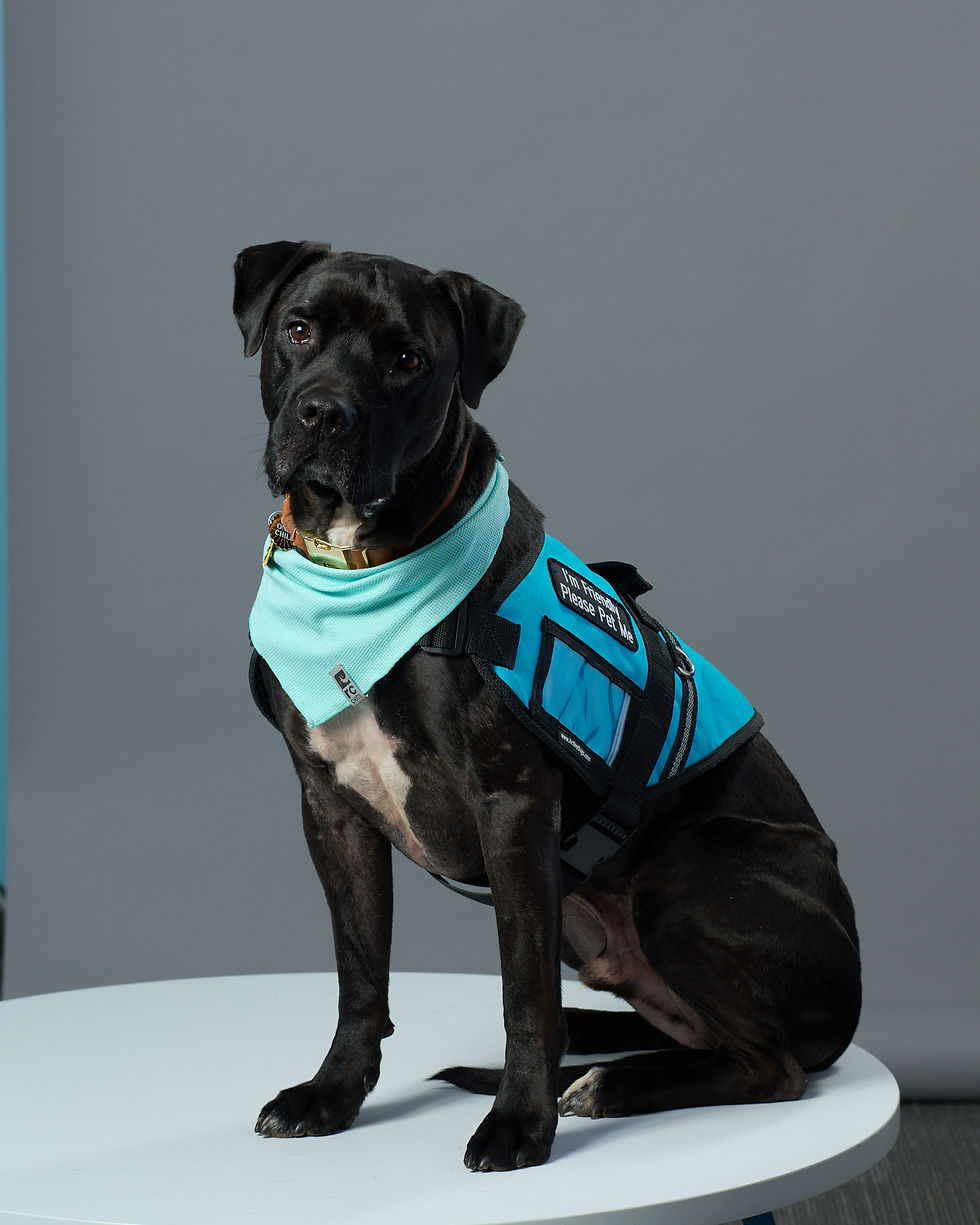
Saber was a big black dog, timid, skittish, extra timid with men, major stranger danger. But Saber loved big and deeply. He loved his people so much. He had a pure heart and goofiest personality. He loved stuffed animals (especially his elephant), kiddie pools, zooming with friends, and fitting his big rear in your lap. He was so very special to me, still is, and just needed someone to give him a chance.
Long story made short:
While in boarding, Saber eventually found someone who saw in him what I did and had their heart stolen the same. One of the trainers who had been working with Saber gave my boy the chance no one else would. For that, I owe her the moon and the stars.
She loved my boy the way I had so deeply wished for someone to for so long.
She saw him — and not as some lost cause, timid, hoarding case, big black dog. She saw him as the magnificent soul he was.
She gave him a chance — the one he had waited on for so long.
She welcomed him into her family, and showed him so much patience and grace helping him blossom into the dog he is today.
“My boy” became someone else’s boy…. and now also a HOSPITAL THERAPY DOG!
Simply “proud” does not even begin to touch it,
nor simply “grateful” for Saber’s mama.
This boy will forever have my heart in a choke hold. I still get excited butterflies visiting years later, still feel like a kid on Christmas seeing him.
The depths of my gratitude to his mama with Super Nova Pet Care could never be overstated, nor the magnitude of how proud I am of Saber.
From the words of his mama….
LOOK AT OUR BOY!
Saber's Certification and Pet Therapy Job
Saber spent a significant amount of time diligently working through a comprehensive exposure training program, supplemented by vet-controlled anxiety medication, all aimed at helping him become a well-adjusted and normal dog. This effort was crucial for him to catch up on the essential developmental milestones he missed out on during the formative years of his life, which were spent in what can only be described as a state of warehousing. The lack of socialization and stimulation during this critical period had left him with significant anxiety and fear of new experiences. To address these challenges, he attended various training classes to provide a controlled environment where distractions from other people and dogs were under heavy control by another trainer. This careful approach allowed Saber to gradually acclimate to the presence of others until he reached a point of realization—that he was indeed safe around others. Once this breakthrough occurred, the transformation in Saber was remarkable; he blossomed into a completely different dog, radiating newfound confidence and enthusiasm. The moment he recognized that people were not a source of danger, he discovered the potential for affection was boundless. His excitement became palpable, so much so that he would eagerly pull towards kind faces that engaged with him, often responding to their gentle baby-talk with an exuberance that showcased his playful spirit. This marked a significant turning point in his journey, where his true temperament began to shine through, revealing a dog that craved connection and companionship. In recognition of their hard work and dedication, Saber and his handler, Jesi—who serves as our lead trainer here at Super Nova—achieved certification as a Pet Therapy Team in early 2025 through The Alliance of Therapy Dogs. This accomplishment was not just a milestone for Saber but also a testament to the bond he had developed with Jesi throughout their training. Together, they have made a meaningful impact by volunteering in various settings, including assisted living homes where they provide comfort and companionship to residents, at the airport where they help alleviate the stress of travelers, and with the Wellstar Health Systems Employee Wellness team, where they bring joy and relaxation to healthcare workers. Their efforts have not only enriched the lives of those they encounter but have also underscored the profound therapeutic benefits that animals like Saber can offer to individuals in need.
Why is Saber's Story so important?
We have previously explored the significant benefits of Pet Therapy for those in need, as well as the substantial costs associated with acquiring task-trained dogs or purpose-bred puppies without training. These costs can range from $2,000 to $3,000 for sourcing a dog, and can exceed $50,000 for a fully task-trained dog. While there are commendable non-profit organizations that provide dogs when available, their supply is often limited. Conversely, our shelter systems are overwhelmed, leading to the undue stress and euthanasia of adoptable dogs simply due to space constraints. Although not every dog in the shelter system is truly adoptable, there exists a public demand for mental relief and an underutilized resource in these potential companions. Shelter dogs have the potential to serve as personal companions, Emotional Support Animals, Therapy Dogs, Service Dogs, Sport Dogs, and more. We are dedicated to assisting individuals in enhancing their lives by discovering personal happiness and beyond through these animals.
How can we utilize shelter dogs to find our own happiness:
Self-Assessment: Consider what life with your ideal dog would entail. Reflect on your lifestyle, any housing restrictions, and activities that would enrich both you and the dog, such as cuddling on the couch, playing fetch in the park, or agility exercises in the backyard.
Dog Assessment: Prioritize finding a dog with a temperament that aligns with your training goals and lifestyle. Avoid focusing solely on physical attributes like coat and eye color. Consider foster-based rescues that can provide insights into a dog's reactions in real-life scenarios. If uncertain, consult a professional to evaluate a dog for your specific needs. Certain breeds may be better for fostering social connections, while others might suit those seeking crowd control due to PTSD. Breed testing can sometimes offer insights into temperament. Foster programs allow you to safely evaluate a dog in your home with a safety net if it doesn't work out.
Plan Care: Determine how you will regularly enrich and exercise your dog. Decide on veterinary care, training goals, and arrangements for when you are unavailable.
Decompression: Once you have the dog, be patient with rules and boundaries during the decompression period. Focus on basic care such as desensitizing to handling, kennel settling, restroom habits, and leash walking. This period may last from three weeks to three months. Employ positive reinforcement and carefully manage the dog's environment until training begins.
Opening the Line of Communication: Acquiring the dog is only the beginning; training is essential. It is advisable to seek professional assistance to achieve your training objectives, whether through group classes or private lessons for controlled social exposure. Even professionals benefit from external feedback and troubleshooting. Whether you seek professional help or self-train, remember that training is a necessity, not a luxury.
How to Support Rescue Dog Training
If you’re inspired by this success story and want to support rescue dog training, here are some ways to get involved:
Volunteer: Many organizations rely on volunteers to help with basic care, training and socialization.
Donate: Financial contributions can help cover the costs of medical care, food, behavioral modification training, and care for rescue dogs.
Adopt: Consider a foster to adopt program, and start training proactively before problem behaviors arise!
Conclusion
Here at Super Nova, we support any ethical sourcing of animals, especially animals obtained for a specific working purpose. However, we are on a special mission to help individuals source animals in need to help bridge access to the many benefits of pet ownership and service animals. We do our best to help our local shelter and rescue organizations to reach as many diamonds in the rough as we can get to reach their full potential. Enriching the lives of those around them instead of pointlessly dying in overcrowded shelter systems. This isn't going to solve the shelter crisis, but we are committed to helping the few we have the privilege of working with shine like a Super Nova star! Everything from Companion Animals, Therapy dogs, Sport Dogs, Psychiatric Assistance, to Medical alert dogs, we have seen rescue dogs do it all!


Comments